Do Lice Live on Pillows, Couches, or Bedding?

Happy Family On Couch Researching: Do Lice Live In The Home?
When a family discovers lice, one of the first concerns is the home environment.
Parents often ask:
Does my home have lice?
Do lice live on pillows?
Do I need to clean everything, including the mattress?
Do lice live on stuffed animals?
Can lice survive on couches or bedding?
Do lice live on my pets?
These questions are understandable. Most families want to clean immediately and prevent lice from spreading further. The good news is that lice cannot live long away from the human head, as they depend on our warmth and feed on human blood.
Understanding where lice can and cannot survive helps families focus on what actually matters.
Can Lice Live on Pillows?
It’s completely understandable to worry about pillows when dealing with lice. The good news is that while a louse can briefly crawl onto a pillow from the head, it cannot live there for long. Head lice depend on the warmth of the scalp and regular blood meals to survive. Once they are away from a human host, most lice die within 24–72 hours, and nearly all are gone within one to three days. Because of this, pillows are not considered a main source of lice transmission.
Lice spread primarily through direct head-to-head contact, not from bedding or household items. Washing pillowcases and sheets is usually all that’s needed for peace of mind. Deep cleaning or replacing every pillow is rarely necessary, especially when pillows are covered with pillowcases that are changed regularly.
If you have decorative or throw pillows that can’t be washed, placing them in a sealed bag for at least three days is a simple, effective precaution. After that time, any lice that may have transferred off the head will no longer survive without a host.
For families who prefer an extra layer of reassurance, pillows can be vacuumed or lint-rolled. Some can also be placed in the dryer on a gentle heat setting, though it’s best to follow care instructions so the pillow keeps its shape and comfort.
Note: When bagging items as a precaution, keep them sealed for a minimum of 72 hours (three days) before using them again.
This calm, simple approach keeps your home comfortable while focusing on what truly matters: treating the scalp and preventing head-to-head spread.
Do Lice Live on Couches or Furniture?
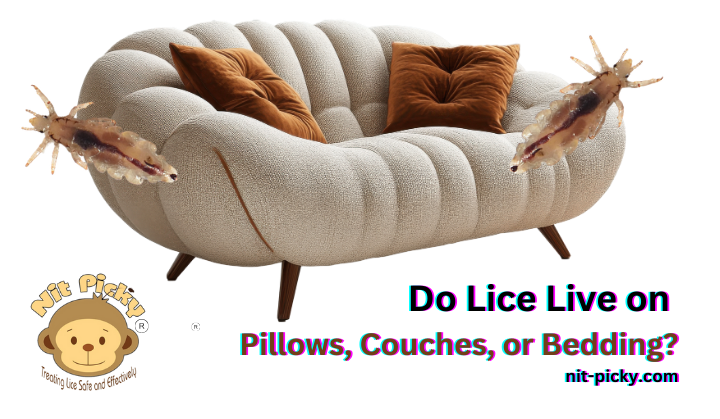
Do Lice Live On Couches?
It’s one of the most common concerns we hear from families: Are lice living in the couch or around the house? The reassuring answer is no. Head lice do not live on couches, carpets, or furniture the way many people fear.
Head lice are human parasites that rely on the warmth of the scalp and frequent blood meals to survive. Their tiny claws are designed specifically to grip human hair, not to move freely across upholstery or household surfaces. They cannot hop, jump, or travel across a room in search of a new host. If a louse happens to fall onto a couch or fabric surface, it may cling briefly to fibers, but without returning to a human head, most lice die within 24–72 hours, and nearly all die within one to three days.
Because of this, furniture is not considered a primary source of lice transmission. Head lice spread mainly through direct head-to-head contact, such as children playing closely together, sharing personal space, or sitting with heads touching. While it’s understandable to feel cautious about shared seating areas, transmission from couches or furniture is considered very unlikely compared to direct contact.
In homes where more than one person currently has lice, it’s reasonable to take simple, calm precautions for reassurance. Routine cleaning is more than sufficient:
• Vacuum upholstered couches and chairs.
• Use a lint roller on fabric cushions.
• Wash removable cushion covers if desired (not necessary, although it provides peace of mind).
• Wipe down hard surfaces (wood, faux leather, plastic, or metal) with a damp cloth.
Hard-surface furniture is even less likely to play any role in transmission because lice cannot grip smooth materials. There is no need for excessive deep cleaning, fumigation, or discarding furniture. Normal household laundry and routine cleaning are generally enough. The most effective way to stop lice spread is always to focus on treating the hair thoroughly and minimizing direct head-to-head contact during an active infestation.
Professional guidance:
According to the lice removal specialists at Nit Picky®, most reinfestations occur from close personal contact, not from furniture or the home environment. A calm, informed approach helps families resolve lice efficiently without unnecessary stress or over-cleaning.
This balanced approach protects your home, your time, and your peace of mind while focusing on what truly matters: complete and careful removal from the hair.
What About Bedding and Blankets?
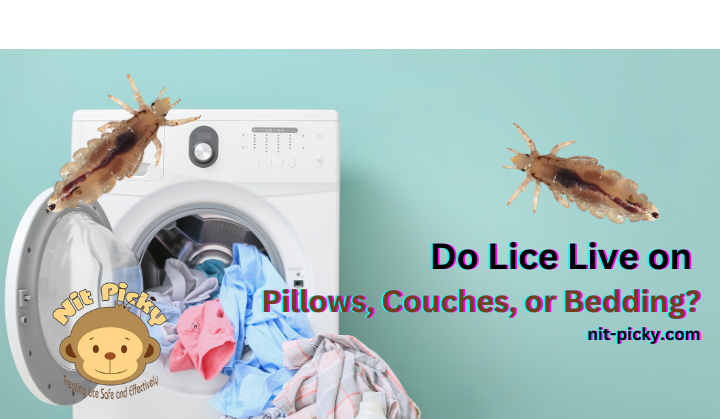
Do Lice Live On Bedding & Blankets?
When lice are discovered, bedding is often the next concern. The good news is that managing sheets and blankets is simple and does not require extreme cleaning.
Head lice survive only on a human scalp and head. If they fall onto bedding, they cannot live long without returning to a host. Most lice die within 24–72 hours, and nearly all die within one to three days off the head. Because of this, bedding is not considered a primary source of lice transmission.
For reassurance, it is reasonable to wash items that were used within the last one to three days. This typically includes:
• Pillowcases
• Bed sheets
• Recently Used blankets
Washing in hot water and drying on a normal heat cycle is sufficient. There is no need for special detergents, disinfectants, or chemical sprays.
Items that cannot be washed, such as decorative blankets or specialty fabrics, can simply be set aside for at least 72 hours (three days). Without access to a human scalp and blood supply, lice will not survive.
Families often feel pressure to bag everything in the house or deep clean every room. This level of cleaning is rarely necessary and can create unnecessary stress. Lice spread primarily through direct head-to-head contact, not from bedding or household surfaces.
Professional insight:
At Nit Picky®, we guide families toward calm, evidence-based aftercare. Focus on thorough scalp treatment, simple laundry of recently used items, and minimizing close head contact. Over-cleaning the home does not stop lice; proper removal from the hair does.
A measured, informed approach protects both your home and your peace of mind.
👉Learn more about how to clean after lice: https://www.nit-picky.com/blog/how-to-treat-your-house-for-lice
Why Lice Spread Mainly Through Contact
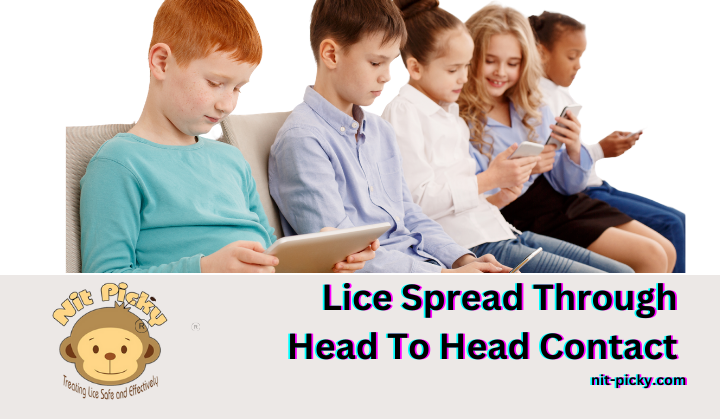
Children On A Couch Looking At Devices Together Can Spread Head Lice
Why lice spread mainly through contact
Head lice spread most often when hair comes into close contact with another person’s hair. This happens during everyday moments when heads naturally lean together, not from the environment. Because lice depend on the warmth and blood supply of the scalp to survive, they move directly from one head to another rather than living on household surfaces.
Common situations where transmission occurs include:
• School and classroom seating
• Sports or team activities
• Sleepovers
• Sharing devices while sitting close together
• Reading side by side - Hugs
• Playtime or family time on the couch
Lice do not jump or fly. They crawl from one strand of hair to another when heads are touching or very close. While it’s possible for a louse to briefly transfer onto a hat, pillow, or fabric, environmental spread through objects is considered far less common than direct contact.
Professional perspective:
At Nit Picky®, we consistently see that reinfestations occur from close personal contact rather than from the home itself. Understanding how lice actually spread helps families focus on what matters most: thorough removal from the hair and reducing head-to-head contact during an active case. A calm, informed approach allows families to manage lice efficiently without unnecessary worry about the entire environment.
👉Learn more about how lice spread: https://www.nit-picky.com/blog/where-do-head-lice-come-from
What Matters More Than Cleaning
The most important step in resolving lice is thorough removal from the hair. Environmental cleaning alone will not end an active infestation. What makes the greatest difference is careful, complete work on the scalp and strands.
Focus on:
• Methodical combing section by section
• Removing both lice and nits (eggs)
• Monitoring the hair in the days following treatment
• Following clear, professional aftercare guidance
These steps are far more effective than excessive cleaning of the home. While simple laundry and routine tidying can provide peace of mind, lice are resolved by removing them from the hair, not by deep cleaning furniture or bagging every item in the house.
If lice appear to return after treatment, it is most often due to missed eggs that later hatch, not because lice are living in the home environment. Understanding this helps families avoid unnecessary stress and focus on what truly prevents reinfestation.
For a deeper explanation of why lice sometimes come back and what actually works, you can read more here:
👉https://www.nit-picky.com/blog/why-lice-keep-coming-back-after-treatment
Professional guidance:
At Nit Picky®, our approach centers on precise removal, calm aftercare, and realistic prevention. When the hair is cleared thoroughly and follow-up guidance is followed, most families do not need to worry about their home as a source of reinfestation.
Reassurance for Families
It is completely natural to feel the urge to clean everything when lice are discovered. Many families worry that lice are living throughout the home, but head lice do not survive in the environment the way people often imagine. They depend on the human scalp for warmth and blood, and without a host, they do not live long on surfaces, bedding, or furniture.
A calm, informed approach makes all the difference. Focusing on thorough removal from the hair, simple laundry of recently used items, and practical aftercare is far more effective than excessive cleaning or bagging the entire home. Most families are relieved to learn that lice are a hair concern, not a household infestation.
Professional reassurance:
At Nit Picky®, we guide families through lice treatment every day, and we consistently see that clear, methodical removal and thoughtful follow-up care resolve lice without the need for overwhelming home cleaning. When you understand how lice actually live and spread, you can respond with confidence, protect your peace of mind, and return your home to normal quickly.
Need Help With Lice Removal?
Families searching for in-home lice removal near you often choose Nit Picky® for safe and effective results.
👉 https://www.nit-picky.com
Nit Picky® offers private, in-home lice checks and professional removal for families throughout North County San Diego, and Temecula, including Encinitas, Carlsbad, Oceanside, Solana Beach, Rancho Santa Fe, and surrounding Inland Empire areas.
If you’re unsure whether you’re dealing with lice, struggling to remove nits completely, or searching for a trusted lice treatment near you, our experienced team is here to help. We provide calm, thorough in-home care designed to eliminate lice and help prevent reinfestation.
👉Learn more about our in-home lice removal services and how we can help your family.
Schedule Your Appointment
Need help now? Book a Nit Picky® in-home lice removal appointment today.
📞 Call or Text (877) 888-2820
✔ Complimentary phone consultations available
✔ Private, in-home service
✔ Experienced technicians
👉Visit our Lice Education page for expert information.
Do-It-Yourself Lice Care with Nit Picky® Non-Toxic Products

Nit Picky DIY Lice Treatment Products
Nit Picky Diy Lice Treatment and Prevention Products
Prefer a DIY approach? Nit Picky® offers non-toxic lice care products designed to support at-home checking, comb-outs, and daily prevention routines.
Our professional-grade nit combs, gentle lice treatment products, and lice repellent sprays are the same tools our technicians use to help families manage lice confidently at home. Easy to use, kid-friendly, and made to fit into busy family routines.
👉 Visit our Complete Guide to Nit Picky® Products to learn more.
FAQ: Where Do Lice Live and How Do They Spread
Q: Do lice live on pillows
A: Lice can briefly end up on a pillow if they fall or crawl from the head, but they cannot live there long. Lice need the human scalp to survive and will dehydrate and die without a blood source. Washing pillowcases and bedding used within the past 72 hours is recommended as a precaution.
Q: Can lice live on couches or furniture
A: Lice do not live on couches or furniture. They are designed to stay on the scalp/head and spread mainly through head to head contact. As a precaution, you can clean or vacuum items that had direct head contact within the past 72 hours, but lice cannot survive long on surfaces.
Q: How long can lice live off the head
A: Lice typically survive less than one to two days away from the scalp/head. Without warmth and blood from a human host, they dehydrate and die. This is why lice do not live in the home environment.
Q: What items should be cleaned if we have lice
A: Focus on items that had direct head contact within the last 72 hours. This may include pillowcases, sheets, recently worn hats, and hair accessories. Washing and drying on heat is sufficient. Items not used in the past three days generally do not need attention.
Q: Do I need to deep clean the entire house
A: Deep cleaning is usually not necessary. Lice depend on the human scalp and do not live in the home. Basic cleaning of recently used items and normal household routines are enough in most cases.
Q: What is the main way lice spread
A: Lice spread primarily through direct head-to-head contact between people. This commonly happens at school, sports, sleepovers, or play. Environmental spread through objects is much less common.
Q: What gets rid of lice eggs permanently?
A: The most reliable way to get rid of lice eggs (nits) is thorough manual removal using a high-quality lice comb. Most over-the-counter treatments do not fully eliminate eggs, so careful section-by-section combing and follow-up monitoring are essential to stop the life cycle and prevent lice from returning.
👉 Read the full guide here:
https://www.nit-picky.com/blog/how-to-remove-lice-eggs-permanently